
ReuseWhakamahi Anō
Love You, Bye. How would you say goodbye to materials if recycling were a love language?
Love You, Bye is a recycling label system for Aotearoa. One mark for every material, in English and te reo Māori, the same on the pack, the bin and the truck. Labels you learn once are how a circular system starts.
Try
The round trip
One mark, all the way round.
The mark on the pack is the mark on the bin and the mark on the truck. Learn it once and it works everywhere.
 Following: A plastic bottle
On the packThe mark names the material, in English and te reo Māori. In the binThe same mark on the bin, so the match is instant. On the truckAnd on the truck, so the system shows on every street. Back againSorted right, it comes back as something new.
Pictures of the proposal. No council or brand carries the marks yet.
The pieces exist. They were never joined up.
Aotearoa already has bin colours agreed in 2015, one national list of what kerbside recycling takes since 2024, and 52 bilingual symbols for bins. Each works on its own. None matches the next, so nothing you learn at the pack helps at the bin.
97%
of us recycle
86%
think it’s worth getting right
61%
check where it goes at the bin, not at the shop
Ministry for the Environment, behavioural trend monitoring, 2025.
The Australasian Recycling Label
The ARL decides. The mark carries that decision to the bin.
The ARL is careful work, backed by a real assessment of what can be recycled. But it speaks to one pack at a time. It doesn’t name the material, it isn’t in the bin’s colour, and it never appears on the bin, so you read it fresh every time.
Love You, Bye keeps that assessment and gives it a mark to travel in. The ARL decides which mark a pack may carry, so a plastic-lined cup never wears the paper mark, and the same mark is waiting on the bin.
Nō hea ngā tohu · Where the marks come from
It works: Norway already does it.
Norway puts one set of sorting labels on its packaging, on bins at home and at work, and at recycling stations. They belong to a Nordic family that began in Denmark, and the EU is now writing the idea into law.
7 in 10
Norwegians say they know the sorting labels
Sortere, 2024
15%
less rubbish when a Copenhagen trial swapped bin signs for the pictograms
Cirkulær, 2024
2029
the earliest EU bins for packaging must carry harmonised labels
EU packaging regulation
Love You, Bye adapts Norway’s sorting labels for Aotearoa: New Zealand’s material streams and agreed recycling colours, English first with te reo Māori beneath. Iconographic attribution is extended to Sortere.
The marks
97 ways to say goodbye.
A mark for every material, English first with te reo Māori beneath. Point at one, or use the arrow keys, to see it up close.
 Glass & Metal Packaging, Karāhe me Mētara
 Glass Packaging, Tākai Karāhe
 Laminated Glass, Karāhe Whakapaparua
 Non-Laminated Glass, Karāhe Māmā
 Windscreens, Karāhe Waka
 Aluminium, Konumohe
 Copper, Konukura
 Electric Motors, Mōtā Hiko
 Iron & Metals, Rino me Mētara
 Metal, Mētara
 Metal Packaging, Tākai Mētara
 Metal Shavings, Mētara Waru
 Tyres, Taiere
 Beverage Cartons, Pouaka Inu
 Cardboard, Kāri
 Cardboard & Paper, Kāri me Pepa
 Paper, Pepa
 Paper for Shredding, Pepa Horo
 Paper, Cardboard & Cartons, Pepa, Kāri me Pouaka
 Bale Wrap, Kirihou Pēra
 Bulk Bags, Pēke Nui
- PET Bottles, Pātara PET
 Plastic, Kirihou
 Plastic Film, Kirihou Kiri
 Plastic Packaging, Tākai Kirihou
 Polystyrene (EPS), Kirihou Māmā
 Soft Plastic Packaging, Tākai Kirihou Ngohengohe
 Cooking Oil, Hinu Tunu
 Food Waste, Para Kai
 Slaughterhouse Waste, Para Parekura
 Garden Waste, Para Māra
 Invasive Species, Momo Tāwaho
 Roots, Pakiaka
 Soil, Oneone
 Broken Ceramics, Porihirīni Pakaru
 Combustible Waste, Para Tahu
 Disposable BBQs, Tunukai Maka
 General Waste, Para Whānui
 Non-Combustible Waste, Para Kore Tahu
 Deposit Return, Utu Whakahoki
 Cables, Taura Hiko
 Electronics, Hiko
 Secure Data Destruction, Whakangaro Raraunga
 Solar Panels, Papa Irarā
 TVs & Screens, Pouaka Whakaata
 White Goods, Taputapu Whare
 Clothing & Textiles, Kākahu Katoa
 Furniture
 Reusable Clothing & Textiles, Kākahu Pai
 Reusable Clothing, Textiles & Shoes, Kākahu, Hū Pai
 Reusable Shoes, Hū Pai
- Reuse, Whakamahi Anō
 White Goods for Reuse, Taputapu Whakamahi Anō
 Timber, Rākau
 Wooden Pallets, Parete Rākau
 Damaged Clothing & Textiles, Kākahu Pakaru
 Brick, Pereki
 Cement & Mortar, Raima me Mōtā
 Concrete, Raima
 Insulation, Whakamahana
 Plaster, Plāta
 Plasterboard with Tiles, Plāta me Tāira
 Porcelain, Porihirīni
 Roofing Felt, Kāri Tuanui
 Stone & Gravel, Kōhatu me Kirikiri
 Tiles & Roof Tiles, Tāira me Tāira Tuanui
 Windows, Matapihi
 Aerosol Cans
 Asbestos, Āperetō
 Batteries, Pūhiko
 Brominated Flame Retardants, Pare Mura
 Car Batteries, Pūhiko Waka
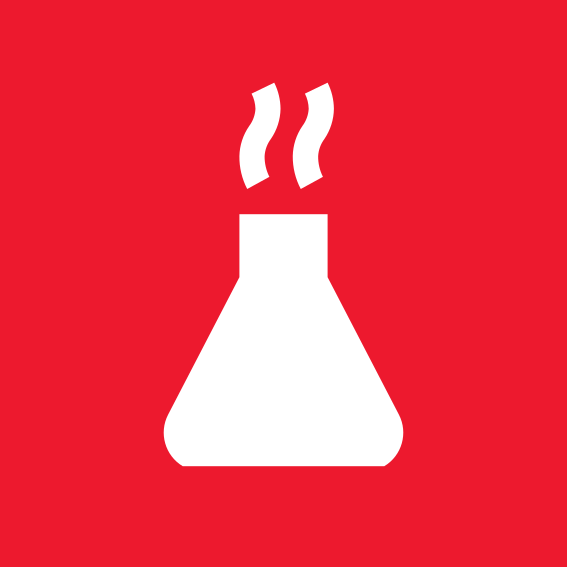 Chemicals, Matū Kēmika
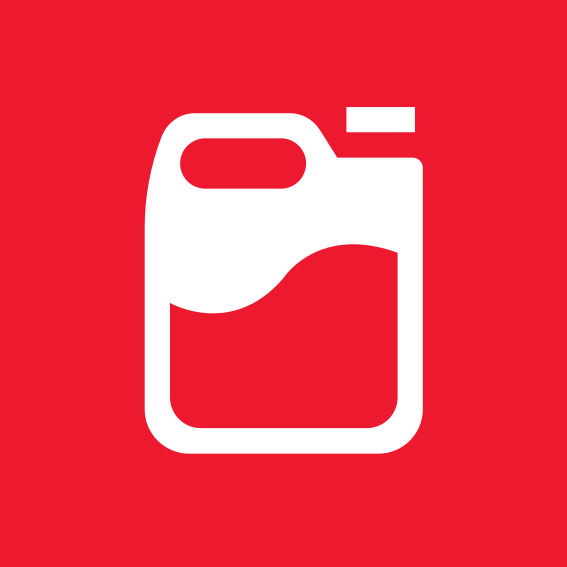 Cleaning Products, Horoi
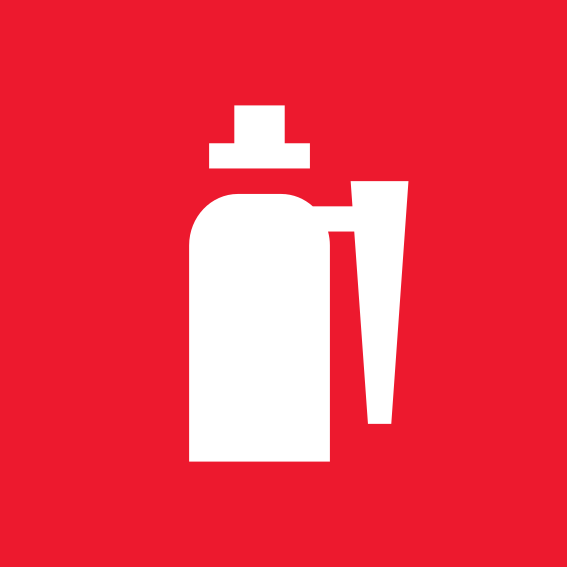 Construction Foam, Hūrangi Hanganga
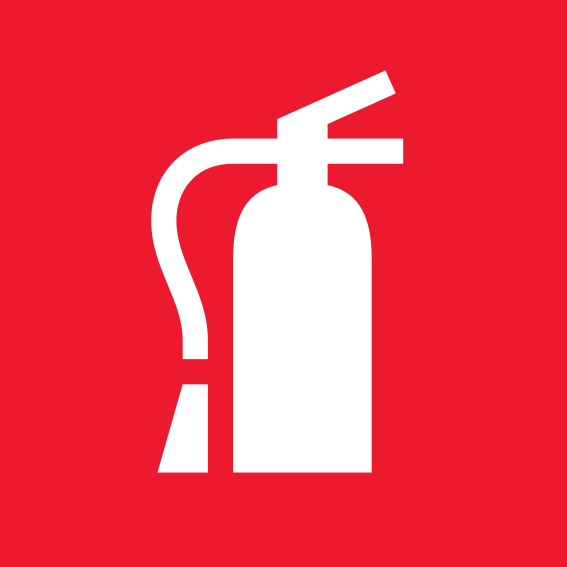 Fire Extinguishers, Whakamoe Ahi
 Fireworks, Tuwhitara
 Floor Coverings, Whariki Papa
 Fluorescent Tubes, Ngongo Kānapanapa
 Fuel Filters, Tātari Hinu
 Gas Canisters, Pounamu Hau
 Hazardous Waste, Para Mōrearea
 High-Energy Batteries, Pūhiko Nui
 Light Bulbs, Pūrama
 Mercury-Containing Waste, Para Konuoi
 Oil Filters, Tātari Hinu
 Oil-Contaminated Materials, Para Hinu
 Paint, Glue & Varnish, Peita, Piri, Wānihi
 Toner Cartridges, Kāhiti Tā
 Treated Timber, Rākau Tiaki
 Waste Oil, Hinu Para
 Windows with Paraffin, Matapihi Paraffin
 Windows with PCB, Matapihi PCB
 XPS Insulation, Whakamahana XPS
 Infectious Waste, Para Mate Piri
 Medical Waste, Para Rongoā
 Sharps, Para Koi
For councils and brands
Put them on your bins and your packs.
Every mark is free to download and use, with credit to Sortere. SVG and print-ready files in English and te reo Māori, with guidelines for colour, type and layout.
Planning a large print run or a product? Confirm terms with LOOP first. The te reo Māori names are drafts until a fluent reviewer signs them off.